• Blog Post IV: The Afterlife of the Aryan Māori Theory

    Edward Tregear’s book was published over 140 years ago, but the questions it raised continued to shape discussions of Māori origins and New Zealand identity long after the initial controversy. Although his specific theory did not necessarily retain its scientific credibility, the broader racial interpretations through which scholars understood Māori ancestry continued to influence discussions into the twentieth century.[1]

    An important development occurred in 1892, when Tregear cofounded The Journal of the Polynesian Society alongside New Zealand ethnologist S. Percy Smith. The Society provided a forum for studying Polynesian peoples, language, histories, and cultures.[2] While the journal gave researchers opportunities to publish and exchange ideas, Tregear’s involvement matters because it placed him in an organisation that shaped the study of Polynesian history for the decades afterwards. This reflected the wider structures of settler colonialism, which shaped not only political and economic control of the land, but also the institutions through which knowledge about the country and its Indigenous population was produced.[3] The Society should not, however, be understood as an institution established solely to promote Tregear’s Aryan theory. Rather, its foundation illustrates how he continued to participate in the scholarly networks through which knowledge about the Pacific was produced and circulated.

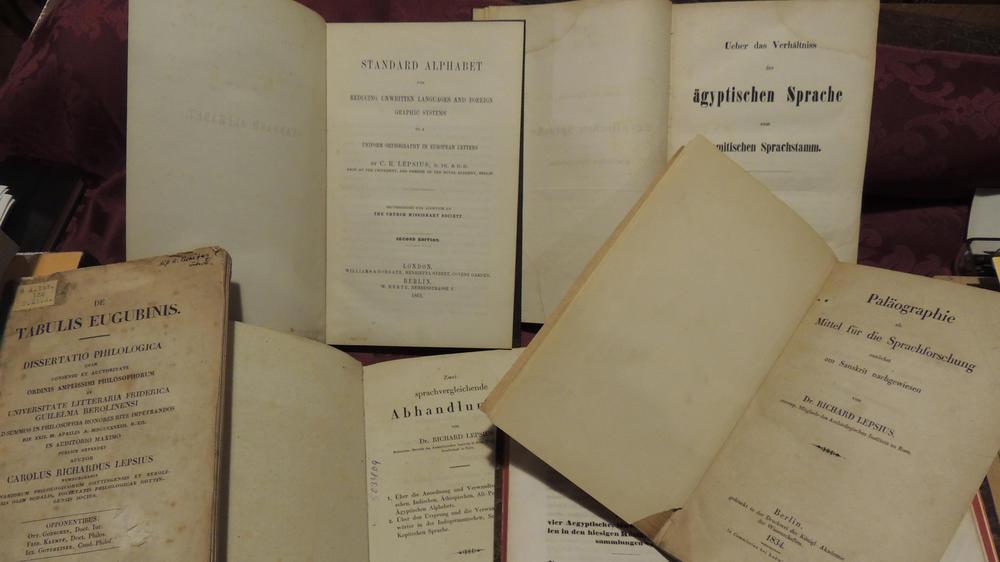
    The Society’s establishment also provides a useful context for understanding the continued interest in Māori origins. Smith justified the journal’s formation by arguing that it was necessary to:
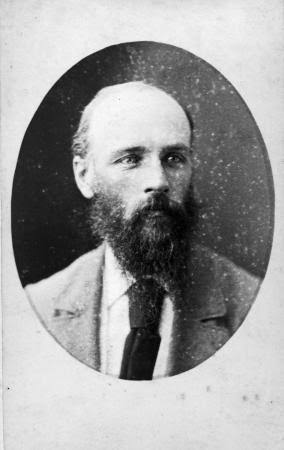
    “Rescue the fast-fading knowledge of the past amongst the natives of New Zealand and the South Seas.” [4]

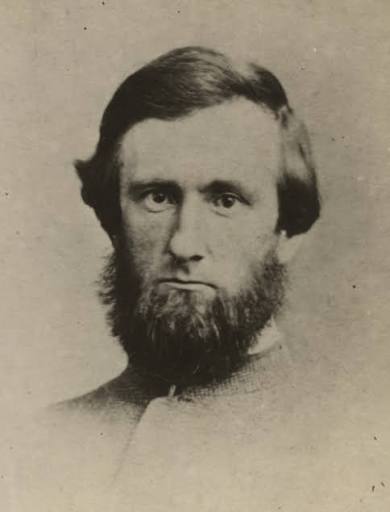
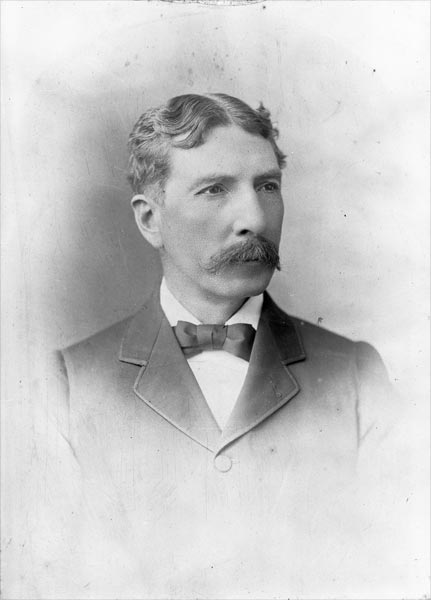
    -S. Percy Smith (as pictured here)

    These efforts nevertheless took place within a colonial intellectual environment shaped by assumptions about racial difference, cultural development and the supposed decline of Indigenous populations. The Society therefore occupied a complicated position: it provided a platform for documenting Polynesian histories and cultures, but did so within the intellectual frameworks of its colonial setting.

    Tregear’s involvement in the Society is particularly significant when considering the longer history of Aryan interpretations. His theory was part of a wider nineteenth-century interest in tracing the origins and migrations of human populations through language and cultural comparisons. Although Atkinson had challenged the reliability of Tregear’s linguistic methods in 1886, the broader question of Polynesian origins remained an important subject of scholarly discussion.[5] This distinction matters: the continued study of Polynesian origins does not necessarily demonstrate the continued acceptance of Tregear’s specific theory. Rather, it shows that broader questions and assumptions about Māori ancestry remained part of scholarly debate.

    From Controversy to Legacy: A Timeline

    • 1885- The Original Theory

      Edward Tregear publishes The Aryan Māori.

    • 1886- A Challenger Approaches

      A. S. Atkinson challenges Tregear’s linguistic comparisons.

    • 1888- Tregear Responds

      Tregear defends his approach to linguistic evidence.

    • 1892-An Enduring Insitituion

      Tregear and S. Percy Smith establish the Polynesian Society.

    • The Twentieth Century

      Racial interpretations of Māori origins continue to influence discussions of national identity.

    These ideas also had implications beyond scholarly debate. Historian James Belich has argued that racial interpretations of Māori origins remained influential during the first half of the twentieth century. They helped incorporate Māori culture into Pākehā understandings of New Zealand’s national past, presenting Māori and Europeans as connected through a shared ancestral history, and reinterpreting their colonisation of New Zealand as a family reunion.[6] Such interpretations could offer a sense of common heritage while still placing Māori within European frameworks of race and civilisation. Aryan theories therefore extended beyond claims about ancient migration. They also formed part of wider attempts to explain the relationship between Māori and Pākehā in a developing settler society.

    Later historians have examined these connections more critically. K. R. Howe places Tregear within a longer tradition of amateur scholars interested in emerging ideas about anthropology and linguistics. Influenced by figures such as Max Müller and Edward Tylor, Tregear adapted these ideas into his own interpretations of Māori origins.[7] Belich similarly notes that racial ideals were embedded in New Zealand’s national identity, particularly through assumptions about Māori “tamability” and their capacity to assimilate into Western society.[8] Their work shifts attention away from simply asking whether Tregear was right or wrong. Instead, it considers why these theories emerged, how they were received and what they reveal about the relationship between scientific knowledge and colonial society.

    The history of the Aryan Māori theory is therefore not simply a story about an incorrect scientific argument. It also demonstrates how ideas can outlast the controversies that first brought them attention. Tregear’s involvement in the Polynesian Society placed him within an enduring network of scholarship on Polynesian history and culture. At the same time, broader racial interpretations continued to shape understandings of Māori origins into the twentieth century.

    What does the story of the Aryan Māori tell us?

    Ultimately, the history of the Aryan Māori theory demonstrates that scientific ideas cannot be understood independently of the societies in which they emerge. Their influence depends not only on the strength of their evidence, but also on the institutions, interests and assumptions that allow them to circulate. Tregear’s theory reminds us that debates about the past can also be debates about the present: about identity, belonging and who has the power to tell a nation’s story.


    [1] James Belich, “Myth, Race, and Identity in New Zealand,” New Zealand Journal of History 31, no. 1 (1997): 13; K. R. Howe, Singer in a Songless Land: A Life of Edward Tregear, 1846–1931 (Auckland: Auckland University Press, 1991), 150.

    [2] Howe, Singer in a Songless Land, 96.

    [3] Richard S. Hill, “Settler Colonialism in New Zealand, 1840–1907,” in The Routledge Handbook of the History of Settler Colonialism, ed. Edward Cavanagh and Lorenzo Veracini (London: Routledge, 2016), 392-93.

    [4] Howe, Singer in a Songless Land, 96.

    [5] A. S. Atkinson, “The Aryo-Semitic Māori,” Transactions and Proceedings of the New Zealand Institute 19, no. 1 (1886): 552; K. R. Howe, “Some Origins and Migrations of Ideas Leading to the Aryan Polynesian Theories of Abraham Fornander and Edward Tregear,” Pacific Studies 11, no. 2 (1988): 78.

    [6] Belich, “Myth, Race, and Identity in New Zealand,” 17.

    [7] Howe, Singer in a Songless Land, 101.

    [8] Belich, “Myth, Race, and Identity in New Zealand,” 10.
  • Blog Post III: Science, Race and the Making of Māori Identity

    Edward Tregear’s theory of shared Aryan ancestry presented Māori and Europeans as members of the same ancient population. At first glance, this might appear to offer a more inclusive understanding of Māori identity, challenging the assumption that the two populations had entirely separate histories.

    However, the implications of Tregear’s argument were more complex. By shoehorning Māori origins through European notions of race and language, the theory incorporated Māori history into Western understandings of civilisation at the height of colonialism. This raises an important question:

    Could a theory that emphasised common ancestry still reinforce unequal power dynamics between Māori and European settlers?

    European scholars increasingly used language to investigate the origins and relationships of different populations. Comparisons of Sanskrit, Greek, and Latin helped establish an Indo-European language family spanning Eurasia, encouraging wider theories about the geographical extent of this linguistic ancestry.

    The term Aryan was central to these discussions. Although it had linguistic and historical associations, it was increasingly used within European racial thought to classify populations and construct accounts of civilisation that positioned Europeans as superior and non-European races as inferior.[1] Indigenous populations were often viewed as inevitably dying out, with their languages and cultural development cited as evidence of this inferiority.[2]

    These ideas travelled throughout the British Empire. Tony Ballantyne notes that Aryanism played a central role in the development of Pacific Studies in colonial settings, which emerged from Eurocentric intellectual debates about Polynesian origins.[3] Evidently, Tregear’s theory was a part of this wider movement.

    As mentioned previously, Tregear argued that Māori descended from an ancient population originating in India. He proposed that Māori language retained evidence of this ancestry, preserving traces of the speech and experiences of their supposed Aryan forebears.

    Tregear’s claims were explicit. He asserted that Māori language had preserved the speech of its ancient ancestors in an “almost inconceivable purity,” suggesting that Greek and Latin had become comparatively corrupted.[4] This reveals the significance he attached to Māori language: it was not merely a means of communication, but evidence of an ancient civilisation.

    Tregear presented a historical narrative connecting Māori and other Pacific populations to Europe and Asia, suggesting their ancestors had separated thousands of years ago. This interpretation made Māori history intelligible through a European lens. Rather than recognising Māori systems of knowledge and interpretation, Tregear shaped Māori origins to fit his Eurocentric accounts of human ancestry. The issue, therefore, was not simply that Tregear dared to compare the languages. He used these comparisons to define Māori racial identity.

    This made the theory significant for the development of Pākehā identity. Decades of European immigration, particularly from the British Isles, contributed to a distinct colonial identity. Although many settlers retained strong connections to Britain, they increasingly developed a sense of belonging shaped by their experiences in New Zealand.[5]

    The colonial situation in New Zealand created a particular tension. Māori communities had longstanding connections to the land spanning centuries, while European settlers were comparatively recent. Therefore, colonial writers sought to explain how Māori people related to the society they saw as established by European settlers. The Aryan interpretation provided a framework that presented Māori and European settlers as members of a shared national community.

    Was Tregear’s theory necessarily progressive?

    The Apparent InclusivenessThe Colonial Implications
    Shared ancestry challenged the idea that Māori and Europeans had entirely separate origins.Shared ancestry could also support the expectation that Māori would eventually assimilate into European society, rather than retain a distinct cultural and political identity.

    However, this “one-people” idea carried racial implications, as many believed Māori would eventually cease to exist as a separate race and instead merge into a Pākehā-Māori identity.[6] For settlers seeking to establish their own connection to the country, this offered a way to incorporate Māori history into a shared national narrative without necessarily recognising Māori as an independent people with their own political and cultural authority.

    The apparent inclusiveness of shared ancestry needs to be considered alongside the unequal relationship between Māori and European settlers. Tregear’s theory could make Māori appear culturally and racially closer to Europeans than other Indigenous populations were assumed to be, providing a basis for imagining their incorporation into European society. Such interpretations could support assimilationist ideas.[7] If Māori and Europeans supposedly shared ancient origins, European institutions and cultural practices could consequently be presented as appropriate models for Māori social development.

    This does not mean that Tregear’s work directly produced government policies, or that every supporter of Aryanism intended to justify assimilation. Rather, its significance lies in how it contributed to a broader intellectual environment in which European categories of race and civilisation shaped understandings of Māori identity. Allan Hanson provides a useful framework for considering how such representations reflected the assumptions of those who produced them, often without consulting the people being studied.[8] His argument encourages us to consider whether descriptions of Indigenous peoples simply record cultural realities or also reveal the perspectives and interests of the scholars who create them.

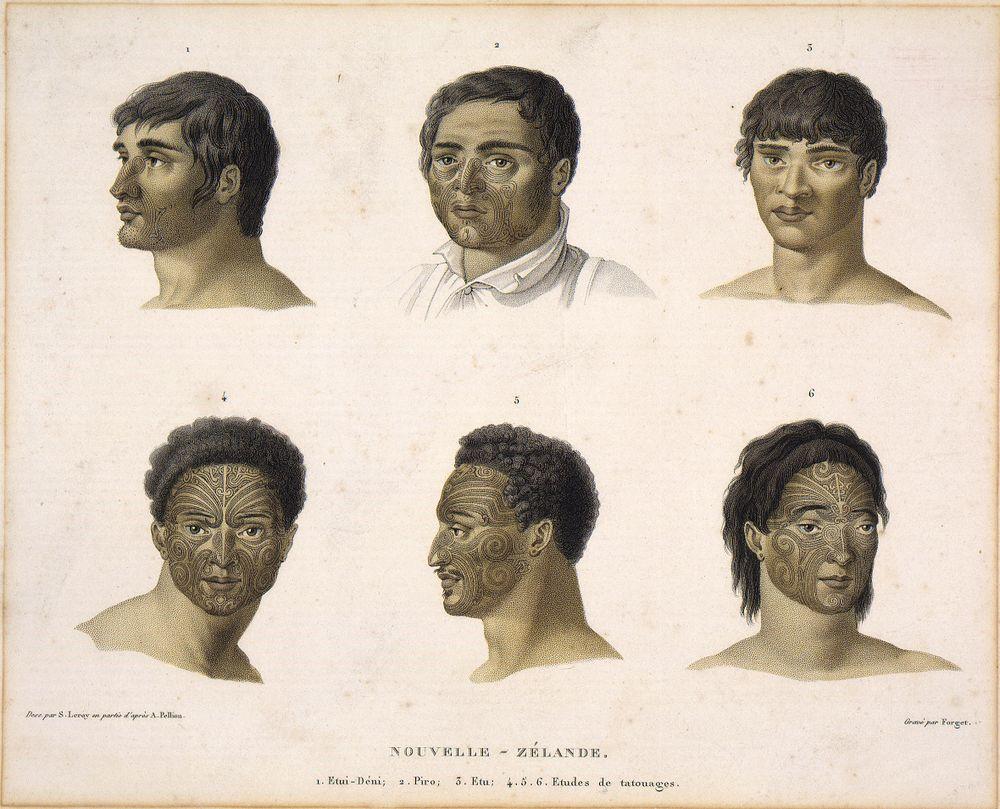
    Studies of Six Māori Heads (1825): Even prior to theories regarding their origins, Māori and other Indigenous groups’ histories and cultures were interpreted through their own perspectives and assumptions.

    This raises a broader question about colonial knowledge production: who had the authority to define Māori identity? European interpretations circulated through scholarly institutions that gave them visibility and authority, while Māori perspectives remained marginal to the frameworks used to produce these theories. The limited Māori perspectives represented in the contemporary published sources examined here reveal whose interpretations were most visible in those scholarly discussions. This does not mean Māori perspectives were absent from wider debates about identity and history.

    The theory’s apparent recognition of common ancestry therefore needs to be distinguished from recognition of Māori historical and cultural autonomy. It could include Māori within a shared national story while leaving the authority to construct that story largely in European hands.

    Tregear’s The Aryan Māori demonstrates how racial ideas could operate through claims of similarity as well as difference. Although shared ancestry appeared to bridge the divide between Māori and Europeans, it also positioned Māori within European systems of classification. The theory consequently contributed to a wider colonial process of defining Māori identity and racial belonging, offering a framework for incorporating Māori history into an emerging Pākehā national identity.

    The final post examines how Aryan interpretations and related ideas about Polynesian origins continued to circulate into the twentieth century, and what their persistence reveals about the relationship between historical knowledge and colonial national identity.


    [1] Tony Ballantyne, Orientalism and Race: Aryanism in the British Empire (Palgrave Macmillan, 2002), 6.

    [2] K. R. Howe, Singer in a Songless Land: A Life of Edward Tregear, 1846–1931 (Auckland University Press, 1991), 50; Ballantyne, Orientalism and Race: Aryanism in the British Empire, 65.

    [3] Ballantyne, Orientalism and Race: Aryanism in the British Empire, 56.

    [4] Edward Tregear, The Aryan Māori (Wellington: George Didsbury, Government Printer, 1885), 5.

    [5] Ron Palenski, The Making of New Zealanders: The Evolution of National Identity in the Nineteenth Century (PhD diss., University of Otago, 2010), 13; Ballantyne, Orientalism and Race: Aryanism in the British Empire, 69-70.

    [6] Trevor Bentley, Images of Pakeha-Māori: A Study of the Representation of Pakeha-Māori by Historians of New Zealand from Arthur Thomson (1859) to James Belich (1996) (PhD diss., University of Waikato, 2007), 196–97.; M. P. K. Sorrenson, “The Whence of the Māori: Some Nineteenth Century Exercises in Scientific Method,” The Journal of the Polynesian Society 86, no. 4 (1977): 470-71.

    [7] James Belich, “Myth, Race, and Identity in New Zealand,” New Zealand Journal of History 31, no. 1 (1997): 19.

    [8] Allan Hanson, “The Making of the Maori: Culture Invention and Its Logic,” American Anthropologist 91, no. 4 (1989): 890–91; Linda Tuhiwai Smith, Decolonizing Methodologies: Research and Indigenous Peoples, 3rd ed. (London: Zed Books, 2021), 8.

  • Blog Post II: When Scientists Disagree: Challenging the Aryan Māori Theory

    Following from Blog 1, Tregear’s The Aryan Māori attracted considerable attention inside and outside the colony after its publication. However, not everyone accepted his ambitious claim that Māori and Europeans were long-lost relatives.

    One critic, amateur linguist and lawyer A. S. Atkinson, took particular issue with Tregear’s linguistic evidence. In an 1886 article titled “The Aryo-Semitic Māori,” Atkinson questioned whether the similarities Tregear identified between Māori and European languages could genuinely establish a shared ancestry.[1] His criticism was deliberately provocative. In response to Tregear’s comparisons, he sarcastically remarked that:

    “The whole Aryan menagerie files out of this ancient, but heretofore unsuspected, Noah’s Ark—the Māori language.”[2]

    -A.S. Atkinson (as pictured here)

    Atkinson was suggesting that Tregear had discovered an entire Aryan world hidden within the Māori language. The humour exposed a serious problem with Tregear’s approach: if linguistic similarities could be selected freely, they could be used to construct almost any account of ancestry.

    He begins his article by outlining Tregear’s central argument: that Māori belonged to the same ancestral family as Indo-European or Aryan populations, and that the Māori language preserved an ancient form of their common ancestral speech. He recognised the “startling” scale of Tregear’s claim, noting that the author attempts to apply Müller’s methods and establish a relationship between Polynesian and Indo-European languages.[3]

    Atkinson questioned whether similarities in sound and meaning were sufficient evidence to establish a historical linguistic relationship.[4] His criticism was not just that individual comparisons were unconvincing. Rather, he argued that Tregear’s approach could be applied so freely that it risked producing almost any desired conclusion. Essentially, Atkinson argued that Tregear cherry-picked words to suit his argument rather than establishing the relationship through legitimate linguistic analysis.

    The comparison between Latin taurus and Māori words such as tara, tararau and taru, discussed in the previous post, provides a useful example. Tregear treated these similarities as evidence that Māori ancestors once lived in pastoral societies like Indo-Europeans.[5] What makes the comparison striking is the distance between the words themselves and the conclusion Tregear wanted them to support. Words associated with courage, noise, points and grass became evidence of an ancestral connection to cattle.

    Atkinson argued that similarities in sound and meaning can appear between languages without demonstrating a genuine historical connection. To expose this problem, he applied Tregear’s method to construct an alternative explanation of Māori ancestry. The title itself, “The Aryo-Semitic Māori,” was deliberately provocative: he proposes that the same comparative methods could be used to show that Māori also have Semitic alongside Aryan connections.[6] He further described Tregear’s approach as the “method of insight,”[7] suggesting that he relied on intuitive recognition of similarities rather than a consistent process of linguistic investigation.

    The distinction between their approaches becomes clearer when considering what each man regarded as convincing evidence. Historical linguists require more than superficial similarities between words to establish relationships between languages. The comparative method examines recurring sound correspondences and grammatical evidence to determine whether similarities reflect a genuine historical relationship rather than coincidence.[8] Atkinson argued that Tregear’s comparisons did not meet these standards.

    TWO COMPETING INTERPRETATIONS

    TREGEAR: The Shared Ancestry ArgumentATKINSON: The Methodological Criticism
    Linguistic similarities between Māori and Indo-European languages suggested connections extending into ancient history.Similarities between words could be misleading and did not necessarily demonstrate common ancestry.

    Further criticism of Tregear appears in a contemporary review in the British journal Nature. Its 1886 review described Tregear’s approach as a “philological paradox” and drew attention to the taurus example. It further suggested that the “poverty” of the Māori language allowed Tregear to “play this fanciful game”.[9] The review demonstrates that Tregear’s work had attracted attention beyond New Zealand, although this wider circulation did not necessarily translate into scholarly acceptance.

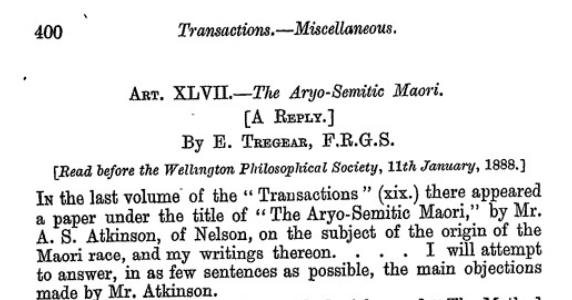
    The disagreement did not end with Atkinson’s article. Tregear published a reply in the Transactions and Proceedings of the New Zealand Institute in 1887, defending his approach and rejecting the suggestion that he had relied on superficial word similarities. He argued that written records alone could not reveal the earliest stages of language, describing those who relied on them as “scratching about on the surface” of human speech. He also defended phonetic comparison, arguing that the “likeness of sound and sense” between Sanskrit and European words had helped establish their shared Aryan ancestry.[10]

    Their disagreement therefore involved competing understandings of linguistic evidence. While Atkinson emphasised systematic comparison and the need to distinguish genuine connections from accidental resemblance, Tregear defended a broader approach that prioritised phonetic similarities and ancient linguistic relationships. Although his response did not resolve Atkinson’s methodological criticisms, it demonstrates that Tregear remained committed to defending the intellectual foundations of his theory.

    What makes the disagreement particularly interesting is that Atkinson was not challenging Tregear from outside New Zealand’s scholarly circles. Both men were part of the colony’s intellectual environment, and both were interested in using language to investigate Māori origins. At the beginning of his article, Atkinson states in a footnote that he rejects the label of a Māori scholar, describing himself instead as someone who had studied the language over a long period.[11] This distinction reflects his concern with the expertise required to make claims about Māori language and the confidence with which Tregear presented his conclusions.

    Atkinson also highlighted the institutional standing of Tregear’s work. He noted that the Government Printing Office had published The Aryan Māori and that Tregear’s related paper, “The Māori in Asia”, had appeared in the Transactions of the New Zealand Institute.[12] These are Atkinson’s observations about the publication and circulation of Tregear’s work. Their significance can be interpreted separately: government printing and publication in a scholarly journal gave Tregear’s arguments visibility within recognised intellectual institutions, even though their appearance did not establish that his conclusions were correct.

    Beneath the disagreement over linguistic evidence was a broader question about who had the authority to explain Māori origins. Both men treated Māori language as historical evidence, but their debate took place within European scholarly frameworks. Māori history was therefore being interpreted through methods and assumptions largely controlled by colonial intellectuals.

    Although Atkinson challenged Tregear’s methodology, his criticism should not automatically be understood as a rejection of the wider racial assumptions underlying nineteenth-century scholarship. Both writers approached Māori origins through European intellectual categories. Historian M. P. K. Sorrenson notes that nineteenth-century studies of Māori origins helped make Māori a suitable subject for assimilation, with their so-called “long-lost Pākehā brothers,” though they often reached competing conclusions.[13] The controversy surrounding Tregear provides a specific example of these disagreements and the difficulties of establishing reliable explanations of the distant past.

    The debate also formed part of a broader intellectual tradition linking Polynesian and Indo-European ancestry. As K. R. Howe explains, Tregear’s theory grew out of earlier ideas about the origins of Polynesian peoples in New Zealand and the Pacific Islands.[14] Its influence, therefore, cannot be understood solely through the immediate disagreement between the two writers.

    The controversy surrounding The Aryan Māori reveals competing expectations about scientific evidence, but it also exposes the institutional and intellectual networks through which colonial knowledge gained authority. Atkinson challenged how Tregear reached his conclusions, but the debate remained situated within a colonial framework that gave European scholars considerable authority to interpret Māori history.

    The next post considers why the idea of shared Aryan ancestry mattered for European understandings of Māori identity and the development of Pākehā national identity.


    [1] A. S. Atkinson, “The Aryo-Semitic Māori,” Transactions and Proceedings of the New Zealand Institute 19, no. 1 (1886): 554.

    [2] Atkinson, “The Aryo-Semitic Māori,” 558.

    [3] Atkinson, “The Aryo-Semitic Māori,” 552.

    [4] Atkinson, “The Aryo-Semitic Māori,” 554.

    [5] Edward Tregear, The Aryan Māori (Wellington: George Didsbury, Government Printer, 1885), 31.

    [6] Atkinson, “The Aryo-Semitic Māori,” 570; K. R. Howe, Singer in a Songless Land: A Life of Edward Tregear, 1846–1931 (Auckland: Auckland University Press, 1991), 56–57.

    [7] Atkinson, “The Aryo-Semitic Māori,” 556.

    [8] Lyle Campbell, “How to Show Languages Are Related: Methods for Distant Genetic Relationship,” in The Handbook of Historical Linguistics, ed. Brian D. Joseph and Richard D. Janda (Oxford: Blackwell, 2003), 263.

    [9] “Our Book Shelf,” Nature 34 (July 29, 1886): 286.

    [10] Edward Tregear, “The Aryo-Semitic Māori: A Reply,” Transactions and Proceedings of the New Zealand Institute 20 no. 1 (1887): 400–401.

    [11] Atkinson, “The Aryo-Semitic Māori,” 552.

    [12] Tregear, The Aryan Māori, 1; Edward Tregear, “The Māori in Asia,” Transactions and Proceedings of the New Zealand Institute 18 (1885): 3.

    [13] M. P. K. Sorrenson, “The Whence of the Māori: Some Nineteenth Century Exercises in Scientific Method,” The Journal of the Polynesian Society 86, no. 4 (1977): 476.

    [14] Howe, Singer in a Songless Land, 50.

  • Blog Post I: Who were the Aryan Māori?

    As the nineteenth century neared its end, the British colony of New Zealand was still relatively young. Although the New Zealand Wars had largely ended by the 1870s, disputes over land, political authority, and Māori’s position within the colony continued.[1] Against this background, colonial scholars debated how Māori and European histories were connected and how both groups fitted into the developing society. These questions formed the basis of a theory proposed by colonial scholar and public servant Edward Tregear, who “proudly asserted” that Māori and Europeans belonged to the same ancient Aryan bloodline.[2]

    Published in 1885, Tregear’s The Aryan Māori attempted to establish a historical connection between Māori and European peoples through language, mythology and migration. Although the theory attracted considerable attention, it additionally generated controversy over the evidence used to support it. The debate revealed how European ideas about race and civilisation shaped colonial scholars’ interpretations of Māori history and identity.

    By the time of publication, Edward Tregear was an influential figure in nineteenth-century New Zealand’s intellectual circles. Immigrating from England in 1863, Tregear began his career in the colony as a surveyor for the Auckland Engineer Volunteers, a role that required him to travel frequently across New Zealand and interact with local Māori tribes (iwi).[3] Through this work, he developed knowledge of the Māori language, its history and culture. Although he never held a university position, he became involved in New Zealand’s intellectual networks, including the Wellington Philosophical Society in the capital. Furthermore, he maintained connections with British scholarly organisations. These connections helped his work circulate beyond New Zealand and placed it within wider networks of colonial and imperial scholarship.[4]

    Edward Tregear (1846-1931)

    A New Zealand public servant, scholar and writer whose interests included the Māori language, comparative linguistics and Polynesian history.

    Tregear’s increasing knowledge of Māori coincided with a wider intellectual interest in comparative linguistics across the Western world. Tregear drew inspiration from German philologist Max Müller, whom he described at the beginning of The Aryan Māori as the “great German thinker”. Müller argued that languages such as Sanskrit, Greek and Latin descended from a common ancestral language, helping establish the concept of an Indo-European language family.[5] These discoveries encouraged further investigations into the dynamics between language, migration, and human ancestry.

    The term Aryan, while initially just having linguistic and historical associations, became increasingly entangled with European ideas of racial classification and theories concerning civilisations. Although, as Howe explains, Tregear was not the first to apply Müller’s theory to New Zealand, his distinctive style and enthusiasm helped make New Zealand and its Indigenous people appear less strange and unknowable to European audiences.[6] Tregear believed he had cracked the code, finding this place permeated with remnants of a shared Aryan past.

    But what did Tregear claim? His argument was unusually ambitious. In his introduction, he makes four positive assertions:

    1. That Māori were Aryan; that their language and traditions demonstrated descent from a pastoral and migratory population.
    2. That Māori had preserved the language of their supposed Aryan ancestors.
    3. That this language retained memories of animals and objects no longer familiar to Māori.
    4. That the Māori left India around four thousand years ago and had settled in New Zealand for almost as long.[7]

    These claims highlight Tregear’s attempt to reconstruct more than a linguistic relationship between cand Europeans. He wanted to use language as a tool to resurrect an entire account of ancient migration and everyday life.

    One example is his comparison of the Latin word taurus, meaning bull, with many Māori words beginning with tara- or tar-. Tregear associated tara with courage, tararau with making a loud noise, tararua with having two points or peaks, and taru with eating grass. He interpreted these words as surviving remnants of an ancestral vocabulary linked to cattle and pastoral lifestyles.[8]

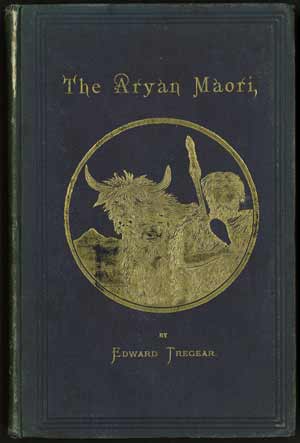
    Look a Little Closer

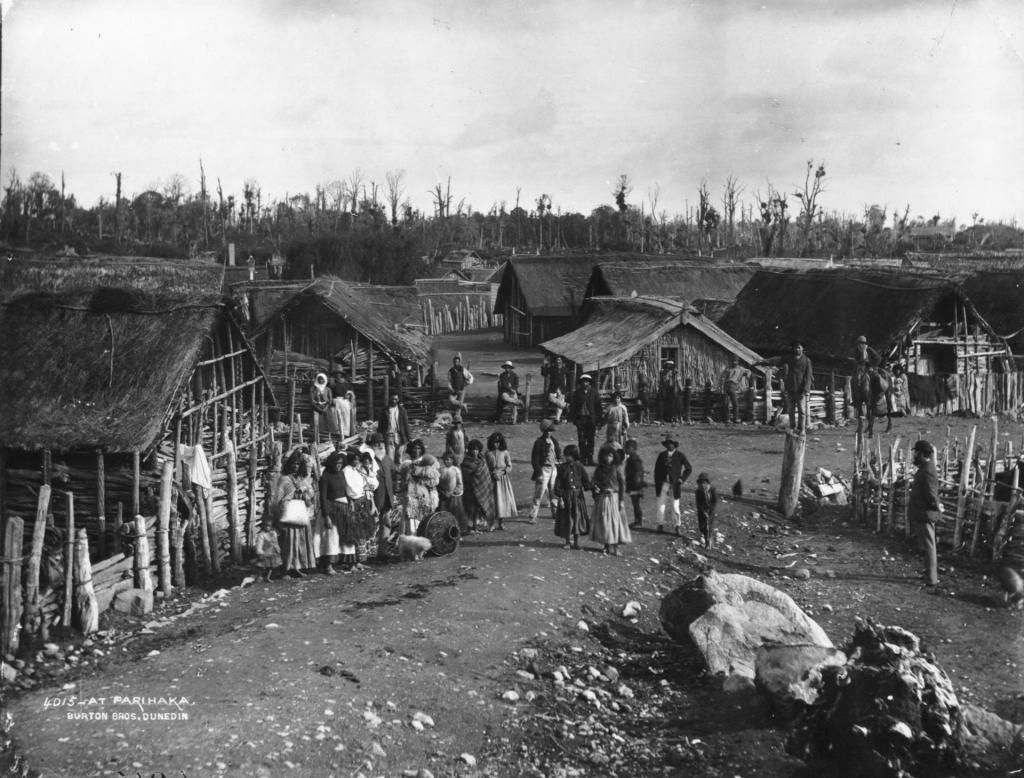
    The depiction of the Māori in traditional garments and the cattle echoes Tregear’s own correlations to the language having clues to a distant pastoral ancestry.

    The justification was that the Māori language preserved traces of animals encountered by their ancestors before their migration into the Pacific, despite cattle being a non-endemic species in pre-European New Zealand. Tregear believed linguistic remnants revealed aspects of a past that could no longer be directly observed.[9]

    The example is revealing because it shows how Tregear moved from word resemblance to conclusions about ancestry and migration. He was not simply suggesting that two words sounded alike. He treated those similarities as evidence of a shared history and used them to reconstruct the experiences of an ancient population.

    But why did this theory matter in the grand scheme of things? Tregear’s argument connected Māori history to a wider European narrative concerning human origins. Historian James Belich describes this theory as a direct challenge to earlier notions that Māori and Europeans had separate histories and cultural practices. However, it operated within conservative frameworks of European racial interpretation.[10] This theory also shaped how settlers understood New Zealand. In the late nineteenth century, Pākehā settlers (Māori for person of European descent) developed a stronger sense of national identity, as the 1880s marked the first time the census recorded more births on New Zealand soil than immigrants. Through this, they sought to form a historical narrative that connected them to the country.[11] While Māori history offered important depth, Europeans interpreted it through their own ideas of assimilation and intellectual assumptions.

    Tregear’s idea of shared ancestry opened the door to a possible connection. It allowed Māori history to fit within a broader account of the nation’s past, while also fitting Māori into categories familiar to European scholars. This apparent inclusion did not necessarily challenge colonial inequalities or recognise Māori authority over interpreting their own histories.

    However, Tregear’s theory alone did not enable these ideas or directly determine colonial policy. Its significance lies in its contributions to the wider intellectual environment of New Zealand and the British Empire, where the dynamics between race, culture, and national belonging could be debated through a common thread.

    Tregear’s claims, however, were not universally embraced. His linguistic methodology was perhaps the most criticised. Specifically, his fellow amateur philologist and lawyer, A. S. Atkinson, published a detailed response in 1886 in the Transactions and Proceedings of the New Zealand Institute, the official research journal at the time for scientific societies across New Zealand. Atkinson’s primary complaint was that comparative linguistics could not establish the strong historical relationship Tregear proposed.[12]

    This controversy was not reduced to whether Māori and European shared an ancient ancestry. It concerned the evidence and methods used to establish such a claim. Tregear’s argument provides a starting point for examining how colonial scholars negotiated scientific authority, and why interpretations of Māori origins matter beyond the study of language.

    The next post examines Atkinson’s criticism and Tregear’s response, exploring the competing methods that made the Aryan Māori theory so controversial.


    [1] Richard S. Hill, “Settler Colonialism in New Zealand, 1840–1907,” in The Routledge Handbook of the History of Settler Colonialism, ed. Edward Cavanagh and Lorenzo Veracini (London: Routledge, 2016), 397.

    [2] Edward Tregear, The Aryan Māori (Wellington: George Didsbury, Government Printer, 1885), 5.

    [3] K. R. Howe, Singer in a Songless Land: A Life of Edward Tregear, 1846–1931 (Auckland: Auckland University Press, 1991), 17–18.

    [4] Tim McKenzie, “Edward Robert Tregear, 1846–1931,” Kōtare: New Zealand Notes & Queries 7, no. 3 (2008), 32.

    [5] Tregear, The Aryan Māori, 1; Howe, Singer in a Songless Land, 45–46.

    [6] Howe, Singer in a Songless Land, 49–50.

    [7] Tregear, The Aryan Māori, 5.

    [8] Tregear, The Aryan Māori, 31-33.

    [9] Tregear, The Aryan Māori, 68.

    [10] James Belich, “Myth, Race, and Identity in New Zealand,” New Zealand Journal of History 31, no. 1 (1997): 10.

    [11] Ron Palenski, The Making of New Zealanders: The Evolution of National Identity in the Nineteenth Century (PhD diss., University of Otago, 2010), 13; Belich, “Myth, Race, and Identity in New Zealand,” 10.
    [12] A. S. Atkinson, “The Aryo-Semitic Māori,” Transactions and Proceedings of the New Zealand Institute 19, no. 1 (1886): 554.

Is this your new site? Log in to activate admin features and dismiss this message
Log In