
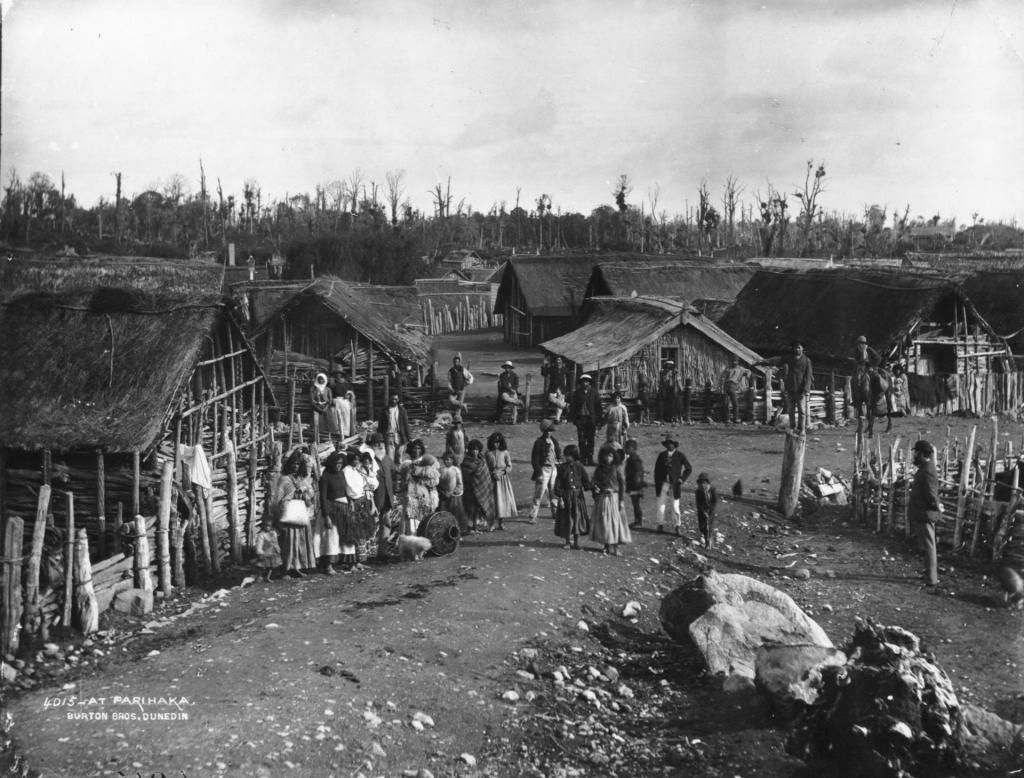
Edward Tregear’s theory of shared Aryan ancestry presented Māori and Europeans as members of the same ancient population. At first glance, this might appear to offer a more inclusive understanding of Māori identity, challenging the assumption that the two populations had entirely separate histories.
However, the implications of Tregear’s argument were more complex. By shoehorning Māori origins through European notions of race and language, the theory incorporated Māori history into Western understandings of civilisation at the height of colonialism. This raises an important question:
Could a theory that emphasised common ancestry still reinforce unequal power dynamics between Māori and European settlers?
European scholars increasingly used language to investigate the origins and relationships of different populations. Comparisons of Sanskrit, Greek, and Latin helped establish an Indo-European language family spanning Eurasia, encouraging wider theories about the geographical extent of this linguistic ancestry.
The term Aryan was central to these discussions. Although it had linguistic and historical associations, it was increasingly used within European racial thought to classify populations and construct accounts of civilisation that positioned Europeans as superior and non-European races as inferior.[1] Indigenous populations were often viewed as inevitably dying out, with their languages and cultural development cited as evidence of this inferiority.[2]
These ideas travelled throughout the British Empire. Tony Ballantyne notes that Aryanism played a central role in the development of Pacific Studies in colonial settings, which emerged from Eurocentric intellectual debates about Polynesian origins.[3] Evidently, Tregear’s theory was a part of this wider movement.
As mentioned previously, Tregear argued that Māori descended from an ancient population originating in India. He proposed that Māori language retained evidence of this ancestry, preserving traces of the speech and experiences of their supposed Aryan forebears.
Tregear’s claims were explicit. He asserted that Māori language had preserved the speech of its ancient ancestors in an “almost inconceivable purity,” suggesting that Greek and Latin had become comparatively corrupted.[4] This reveals the significance he attached to Māori language: it was not merely a means of communication, but evidence of an ancient civilisation.
Tregear presented a historical narrative connecting Māori and other Pacific populations to Europe and Asia, suggesting their ancestors had separated thousands of years ago. This interpretation made Māori history intelligible through a European lens. Rather than recognising Māori systems of knowledge and interpretation, Tregear shaped Māori origins to fit his Eurocentric accounts of human ancestry. The issue, therefore, was not simply that Tregear dared to compare the languages. He used these comparisons to define Māori racial identity.
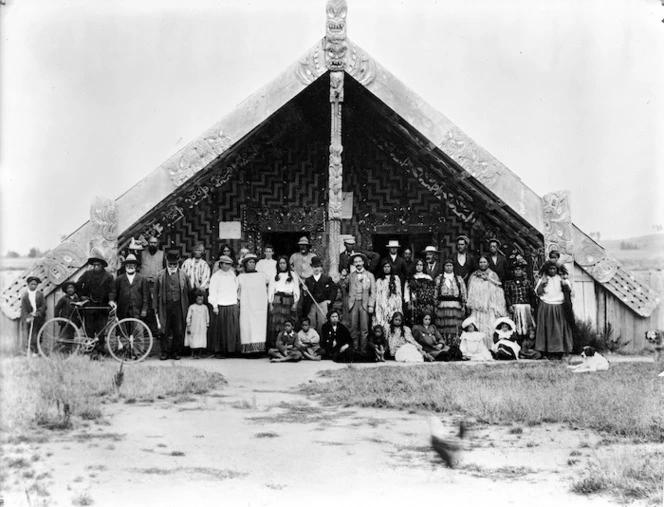
This made the theory significant for the development of Pākehā identity. Decades of European immigration, particularly from the British Isles, contributed to a distinct colonial identity. Although many settlers retained strong connections to Britain, they increasingly developed a sense of belonging shaped by their experiences in New Zealand.[5]
The colonial situation in New Zealand created a particular tension. Māori communities had longstanding connections to the land spanning centuries, while European settlers were comparatively recent. Therefore, colonial writers sought to explain how Māori people related to the society they saw as established by European settlers. The Aryan interpretation provided a framework that presented Māori and European settlers as members of a shared national community.
Was Tregear’s theory necessarily progressive?
| The Apparent Inclusiveness | The Colonial Implications |
| Shared ancestry challenged the idea that Māori and Europeans had entirely separate origins. | Shared ancestry could also support the expectation that Māori would eventually assimilate into European society, rather than retain a distinct cultural and political identity. |
However, this “one-people” idea carried racial implications, as many believed Māori would eventually cease to exist as a separate race and instead merge into a Pākehā-Māori identity.[6] For settlers seeking to establish their own connection to the country, this offered a way to incorporate Māori history into a shared national narrative without necessarily recognising Māori as an independent people with their own political and cultural authority.
The apparent inclusiveness of shared ancestry needs to be considered alongside the unequal relationship between Māori and European settlers. Tregear’s theory could make Māori appear culturally and racially closer to Europeans than other Indigenous populations were assumed to be, providing a basis for imagining their incorporation into European society. Such interpretations could support assimilationist ideas.[7] If Māori and Europeans supposedly shared ancient origins, European institutions and cultural practices could consequently be presented as appropriate models for Māori social development.
This does not mean that Tregear’s work directly produced government policies, or that every supporter of Aryanism intended to justify assimilation. Rather, its significance lies in how it contributed to a broader intellectual environment in which European categories of race and civilisation shaped understandings of Māori identity. Allan Hanson provides a useful framework for considering how such representations reflected the assumptions of those who produced them, often without consulting the people being studied.[8] His argument encourages us to consider whether descriptions of Indigenous peoples simply record cultural realities or also reveal the perspectives and interests of the scholars who create them.
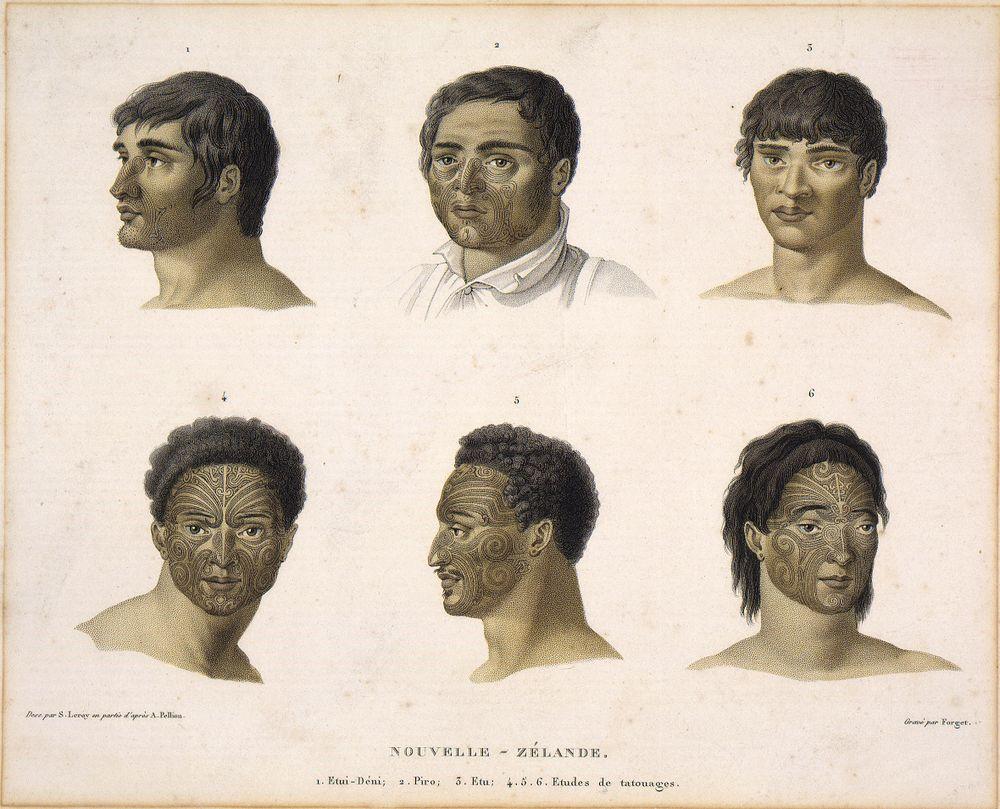
Studies of Six Māori Heads (1825): Even prior to theories regarding their origins, Māori and other Indigenous groups’ histories and cultures were interpreted through their own perspectives and assumptions.
This raises a broader question about colonial knowledge production: who had the authority to define Māori identity? European interpretations circulated through scholarly institutions that gave them visibility and authority, while Māori perspectives remained marginal to the frameworks used to produce these theories. The limited Māori perspectives represented in the contemporary published sources examined here reveal whose interpretations were most visible in those scholarly discussions. This does not mean Māori perspectives were absent from wider debates about identity and history.
The theory’s apparent recognition of common ancestry therefore needs to be distinguished from recognition of Māori historical and cultural autonomy. It could include Māori within a shared national story while leaving the authority to construct that story largely in European hands.
Tregear’s The Aryan Māori demonstrates how racial ideas could operate through claims of similarity as well as difference. Although shared ancestry appeared to bridge the divide between Māori and Europeans, it also positioned Māori within European systems of classification. The theory consequently contributed to a wider colonial process of defining Māori identity and racial belonging, offering a framework for incorporating Māori history into an emerging Pākehā national identity.
The final post examines how Aryan interpretations and related ideas about Polynesian origins continued to circulate into the twentieth century, and what their persistence reveals about the relationship between historical knowledge and colonial national identity.
[1] Tony Ballantyne, Orientalism and Race: Aryanism in the British Empire (Palgrave Macmillan, 2002), 6.
[2] K. R. Howe, Singer in a Songless Land: A Life of Edward Tregear, 1846–1931 (Auckland University Press, 1991), 50; Ballantyne, Orientalism and Race: Aryanism in the British Empire, 65.
[3] Ballantyne, Orientalism and Race: Aryanism in the British Empire, 56.
[4] Edward Tregear, The Aryan Māori (Wellington: George Didsbury, Government Printer, 1885), 5.
[5] Ron Palenski, The Making of New Zealanders: The Evolution of National Identity in the Nineteenth Century (PhD diss., University of Otago, 2010), 13; Ballantyne, Orientalism and Race: Aryanism in the British Empire, 69-70.
[6] Trevor Bentley, Images of Pakeha-Māori: A Study of the Representation of Pakeha-Māori by Historians of New Zealand from Arthur Thomson (1859) to James Belich (1996) (PhD diss., University of Waikato, 2007), 196–97.; M. P. K. Sorrenson, “The Whence of the Māori: Some Nineteenth Century Exercises in Scientific Method,” The Journal of the Polynesian Society 86, no. 4 (1977): 470-71.
[7] James Belich, “Myth, Race, and Identity in New Zealand,” New Zealand Journal of History 31, no. 1 (1997): 19.
[8] Allan Hanson, “The Making of the Maori: Culture Invention and Its Logic,” American Anthropologist 91, no. 4 (1989): 890–91; Linda Tuhiwai Smith, Decolonizing Methodologies: Research and Indigenous Peoples, 3rd ed. (London: Zed Books, 2021), 8.


Leave a Reply